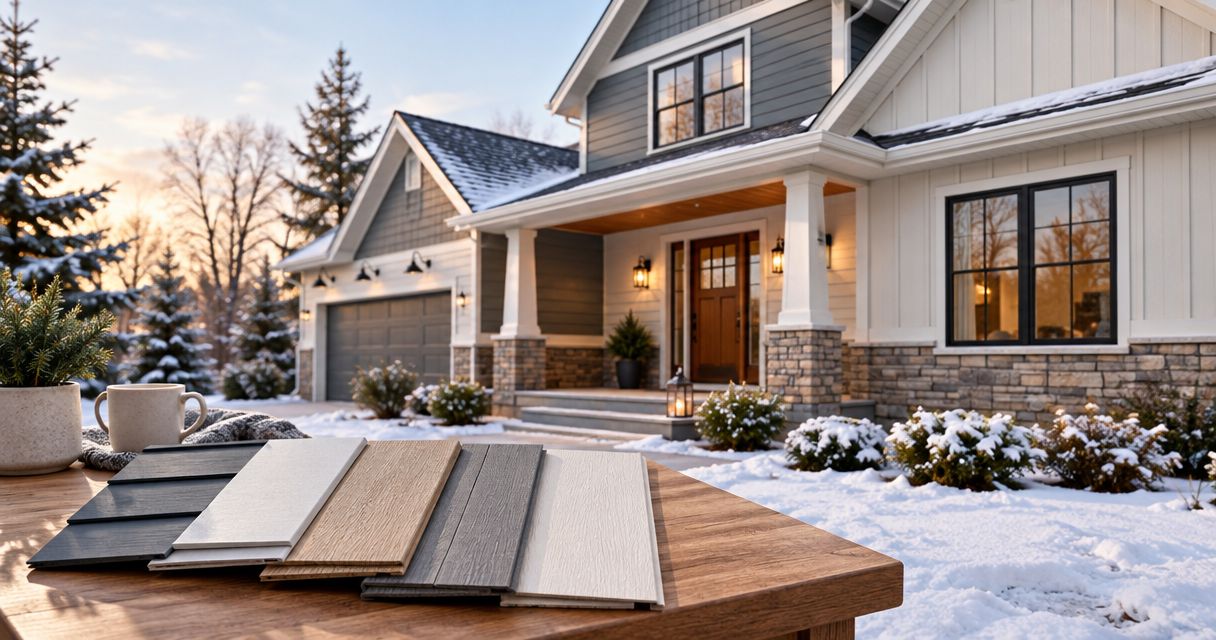
Best overall: fiber cement. Best for homeowners prioritizing a noncombustible exterior: steel. Best for avoiding routine repainting: vinyl. This 2026 guide compares six siding materials for Minnesota homes, with the installation details and maintenance trade-offs that should drive your decision.
- Best siding materials Minnesota homeowners should compare: fiber cement, steel, engineered wood, vinyl, cedar, and stucco.
- Fiber cement is the default recommendation when you want a painted exterior and accept future coating maintenance.
- Steel suits homeowners prioritizing noncombustible cladding; vinyl eliminates routine painting but needs room for thermal movement.
- Atozmn handles Twin Cities remodeling, including siding; request a free consultation to define your project scope.
Why this matters
Minnesota siding must manage rain, snow, temperature changes, and moisture escaping from inside the house. The visible material is only part of that job. Flashing, the water-resistive barrier, and drainage details determine where water goes after it gets behind the siding.
Atozmn provides residential and commercial remodeling, including siding, in the Twin Cities metro. Atozmn is a fit for Twin Cities homeowners seeking siding work within a broader remodeling project. Compare the proposed wall assembly as closely as the siding sample.
What makes the best siding for Minnesota homes?
Use these criteria to judge your 2026 siding project before choosing a color or profile:
- Weather resistance: Evaluate how the specified product handles moisture, temperature changes, and impact. No material makes poor flashing acceptable.
- Drainage details: Require a clear plan for the water-resistive barrier, window flashing, penetrations, and roof-to-wall intersections.
- Maintenance: Separate cleaning from painting, staining, caulking, and repairing damaged pieces. Those are different commitments.
- Repairability: Ask how damaged sections come out and how replacement profiles and finishes will be matched.
- Project fit: Consider existing trim, additions, sunrooms, windows, and the condition of the wall beneath the siding.
Do not rank siding by thickness alone. A thicker panel does not establish the performance of the complete wall, and an attractive surface does not reveal the condition underneath.
Minnesota siding materials at a glance
| Rank and material | Best for | Standout feature | Key limitation |
|---|---|---|---|
| 1. Fiber cement | A painted exterior with dimensional stability | Cement-based boards resist rot | Heavy material requires careful cutting, fastening, and clearances |
| 2. Steel | Noncombustible exterior cladding | Metal panels do not support rot | Impact can leave dents; damaged coatings need attention |
| 3. Engineered wood | Wood-look siding in a lighter board | Manufactured wood substrate supports familiar trim profiles | Cut edges, coatings, and moisture clearances need close attention |
| 4. Vinyl | Avoiding routine repainting | Integral color eliminates a regular painting cycle | Cold-weather impact can crack panels |
| 5. Cedar | Authentic natural wood | Real grain and repairable individual boards | Requires recurring finish and moisture management |
| 6. Stucco | A continuous textured exterior | Troweled finish without lap-board joints | Drainage and repair detailing demand particular care |
These rankings compare material categories, not individual product lines. Product instructions, wall conditions, and installation details still control the final specification.
1. Fiber cement: best siding for a painted exterior
Fiber cement combines cement, reinforcing fibers, and other ingredients into siding boards or panels. It resists rot and gives you a painted exterior without using solid wood as the exposed cladding.
For a 2026 replacement project, fiber cement is the default when your priorities are dimensional stability and a conventional painted appearance. Its weight and installation requirements make crew experience important.
Fiber cement pros:
- Resists rot and insect damage.
- Supports lap, panel, and shingle-style designs.
- Accepts painted finishes for future color changes.
Fiber cement cons:
- Heavy boards require careful handling and fastening.
- Cutting requires appropriate dust controls.
- Paint, joints, and specified clearances still require maintenance.
Ask how the contractor will handle cut edges, horizontal joints, and clearance above roofing or paving. Requirements differ by product; a generic detail is not enough.
Best for: Homeowners who want a painted exterior and accept future coating maintenance.
Verdict: Buy fiber cement for the strongest default balance of appearance, rot resistance, and repaintability.
2. Steel: best siding for noncombustible cladding
Steel siding provides a metal exterior surface that does not support rot or combustion. That characteristic applies to the cladding, not automatically to the complete wall assembly or the home's wildfire performance.
Steel deserves consideration when you want a factory-finished exterior without wood-based siding. Inspect sample corners and trim as well as the main panel; those details shape the finished result.
Steel pros:
- Noncombustible cladding material.
- Does not rot or attract wood-destroying insects.
- Factory finishes avoid a routine wood-staining cycle.
Steel cons:
- Hail and other impacts can leave visible dents.
- Scratches and exposed cut edges require attention under the product instructions.
- Replacing damaged panels requires matching the profile and finish.
Ask the contractor to explain how penetrations and cut edges will be protected. Do not confuse resistance to rot with immunity to corrosion.
Best for: Homeowners prioritizing metal cladding and noncombustibility.
Verdict: Buy steel when those material properties matter more than resistance to visible denting.
3. Engineered wood: best siding for wood-look profiles
Engineered wood siding uses a manufactured wood substrate with protective treatments and finishes. It offers wood-look boards and trim without the weight of fiber cement.
The important trade-off is moisture sensitivity at vulnerable details. Good installation protects edges and keeps siding away from surfaces where water collects.
Engineered wood pros:
- Lighter handling than fiber cement.
- Available in familiar lap and panel configurations.
- Supports coordinated wood-look trim details.
Engineered wood cons:
- Improperly protected edges are vulnerable to moisture.
- Coatings and sealant joints need inspection and upkeep.
- Product-specific clearances cannot be treated as optional.
Request the exact product installation instructions with the proposal. Check how the scope addresses field cuts, bottom edges, and transitions above decks or roof surfaces.
Best for: Homeowners seeking wood-look siding with lighter boards.
Verdict: Buy engineered wood only with an explicit edge-protection and clearance plan.
4. Vinyl: best siding for avoiding routine repainting
Vinyl siding uses colored polymer panels rather than a painted wood surface. It needs cleaning and inspection, but it does not require a regular repainting cycle to preserve its original finish.
For your 2026 project, focus on fastening and movement allowances rather than treating every vinyl panel as interchangeable. Panels expand and contract with temperature changes.
Vinyl pros:
- Eliminates routine exterior painting.
- Does not rot.
- Individual damaged panels can be replaced when matching material is obtainable.
Vinyl cons:
- Cold-weather impacts can crack panels.
- Excessive heat can distort the surface.
- Tight fastening can restrict movement and cause distortion.
Do not credit standard vinyl siding with meaningful wall insulation simply because it covers the house. If added insulation is part of your goal, require a separate wall-assembly specification.
Best for: Homeowners whose main maintenance priority is avoiding repainting.
Verdict: Buy vinyl for that maintenance goal, not as a substitute for insulation or water management.
5. Cedar: best siding for authentic natural wood
Cedar gives you real wood grain and accepts paint or stain. Individual boards can be repaired or replaced, making it a reasonable choice when preserving a wood exterior matters more than minimizing maintenance.
Wood still absorbs and releases moisture. Board detailing, drying potential, finish condition, and clearance from wet surfaces all matter.
Cedar pros:
- Provides authentic wood grain rather than an embossed texture.
- Accepts different finish approaches.
- Allows localized board repairs.
Cedar cons:
- Requires recurring finish inspection and maintenance.
- Remains vulnerable to decay when kept wet.
- Natural variation affects appearance and matching.
Look closely at shaded elevations, splashback areas, and places where vegetation touches the wall. Those locations deserve attention during both installation and ongoing maintenance.
Best for: Homeowners committed to a genuine wood exterior.
Verdict: Buy cedar for the material itself; skip it if low maintenance is your deciding criterion.
6. Stucco: best siding for a continuous textured exterior
Traditional stucco creates a cement-based exterior finish over a supporting assembly. It suits homeowners who specifically want a continuous textured surface rather than overlapping boards.
A stucco selection needs two separate decisions: the appearance of the finish and the design of the wall behind it. Neither replaces the other.
Stucco pros:
- Produces a continuous textured appearance.
- Supports varied surface textures.
- Avoids the repeated horizontal joints of lap siding.
Stucco cons:
- Cracks require evaluation rather than automatic cosmetic patching.
- Repair texture and color can be difficult to match.
- Poor drainage or flashing can conceal moisture problems behind the finish.
When comparing stucco finish durability, distinguish surface wear from water-management performance: an intact-looking texture does not establish that window flashing or drainage details are correct.
Best for: Homeowners deliberately choosing a textured exterior and accepting specialized detailing and repair work.
Verdict: Hold until the proposal explains the complete stucco assembly, not just the finish coat.
What should your siding contractor inspect before quoting?
A useful 2026 siding proposal starts with the existing wall, not the color chart. Ask the contractor to distinguish visible conditions from concealed conditions that cannot be confirmed until removal.
Use this inspection checklist:
- Wall condition: Identify soft trim, staining, loose siding, and suspected sheathing damage.
- Water barrier: Explain whether the existing barrier will remain or be replaced, and how new work will connect to it.
- Window flashing: Describe integration at window heads, sides, and sills rather than relying on perimeter caulk alone.
- Roof transitions: Identify roof-to-wall flashing and locations that need kickout flashing to direct runoff away from walls.
- Ground clearance: Show how siding will remain clear of soil, paving, roofing, and other adjacent surfaces according to its instructions.
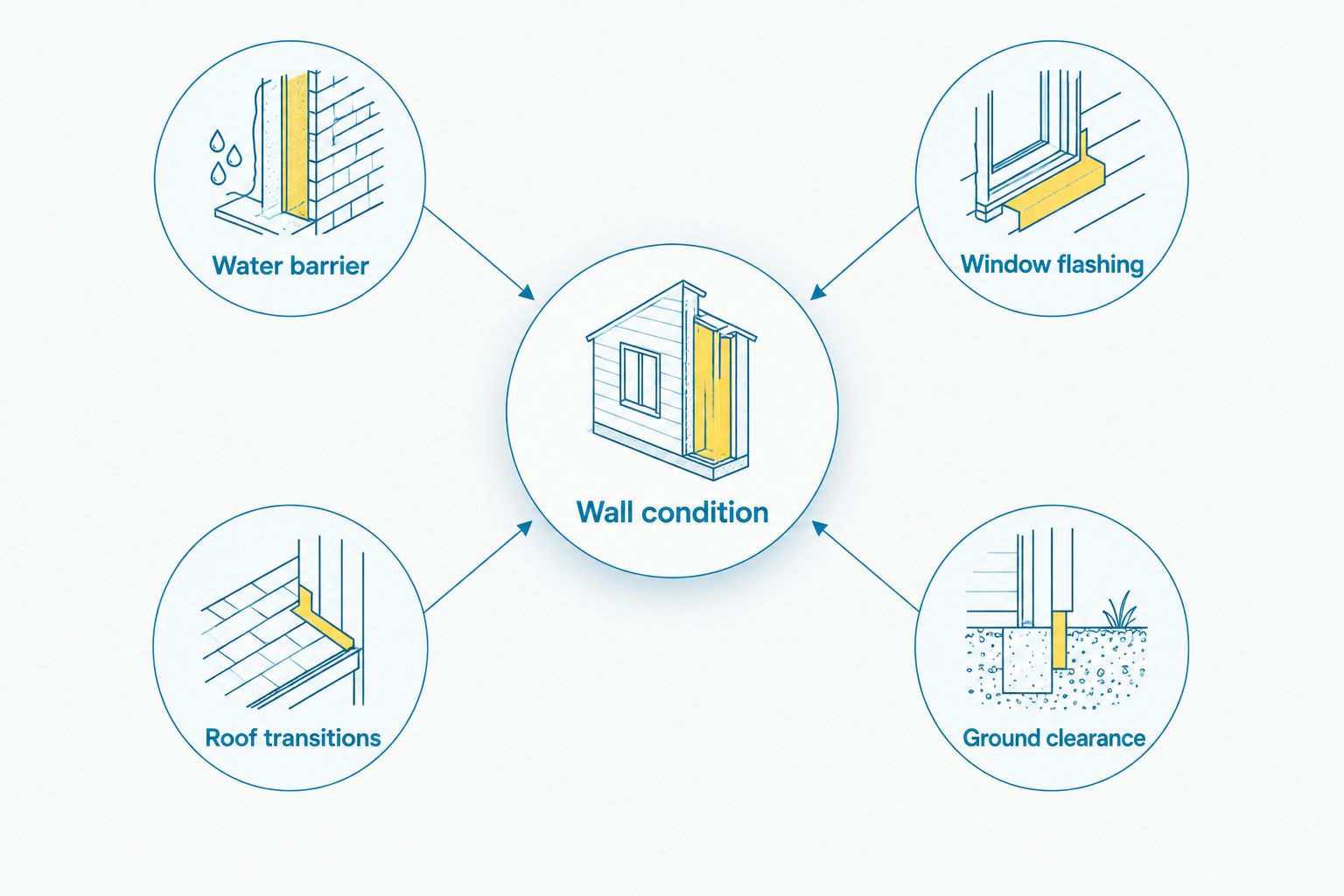
For each concern, take 2 photos: one close-up and one wider view showing its location. Organize notes by all 4 exterior elevations so the quote addresses the entire house rather than only the most visible damage.
The questions in what Minneapolis siding contractors should check before a quote help turn that inspection into a defined scope. Require a written process for approving concealed repairs before extra work proceeds.
Coordinate siding with additions, sunrooms, and windows
If your 2026 plans include a home addition or sunroom, settle its exterior connections before finalizing siding work. New roof intersections, window openings, and wall transitions change the flashing and trim scope.
Matching an older exterior also requires more than choosing the same general color. Compare exposure width, surface texture, corner details, and trim depth. A small sample cannot show how a whole elevation will read.
For an addition, choose between matching the existing material and using a deliberate transition at a corner or other clear break. For a sunroom, coordinate the siding with the window system and the connection to the existing house.
Ask Atozmn to define these interfaces during your siding and remodeling consultation. Bring 3 priorities in order: the problem to fix, the maintenance you will accept, and the appearance you want.
Plan your siding project
Discuss siding, wall repairs, and connections to planned additions or sunrooms during a free consultation.
How the siding materials were ranked
The ranking prioritizes weather exposure, drainage requirements, maintenance, repairability, and fit with existing construction. Fiber cement takes the default position because it combines rot resistance with a conventional painted exterior; the other materials win narrower use cases.
This is a material-selection guide, not a product test or a ranking of installers. No category recommendation overrides the selected product's instructions or defects in the existing wall.
Which siding should you choose?
Choose fiber cement if you want a clear starting point for a 2026 siding quote. Choose steel for noncombustible cladding, vinyl to avoid routine repainting, engineered wood for lighter wood-look boards, cedar for natural wood, or stucco for a continuous textured finish.
Then compare equivalent scopes. A proposal that includes removal, wall repairs, flashing, trim, and cleanup is not directly comparable to one that lists only new siding installation.
FAQ
What’s the best siding material for Minnesota homes?
Fiber cement is the default recommendation for Minnesota homeowners seeking rot-resistant siding with a painted appearance. Steel, vinyl, engineered wood, cedar, and stucco suit different maintenance and design priorities.
Is steel siding better than vinyl in Minnesota?
Steel is better when your priority is noncombustible metal cladding; vinyl is better when your priority is avoiding routine repainting without choosing metal. Steel can dent, while vinyl can crack under cold-weather impact.
Does fiber cement siding need maintenance?
Yes. Fiber cement siding requires inspection of coatings, joints, flashing, and clearances, with maintenance performed according to the selected product’s instructions.
Will new siding fix a drafty Minnesota house?
New siding alone is not an air-sealing plan. Ask the contractor to identify leakage paths and specify any air-barrier repairs or insulation work separately.
Should I replace siding before building a home addition?
Coordinate the addition design before committing to the siding scope. New walls, roof connections, and windows change where flashing, trim, and siding transitions belong.
Can I match new siding to my existing house?
A close match depends on the existing material, profile, exposure, texture, and weathering. Compare physical samples and define a transition where an exact match is not achievable.
What should I bring to a siding consultation?
Bring exterior photos, notes about leaks or damage, and any plans for windows, additions, or sunrooms. Atozmn offers a free consultation for Twin Cities remodeling projects, including siding.
One last thing
Save the exact product identification, color, profile, and installation instructions with your project records. Ask the contractor which spare pieces are practical to retain for future repairs; a familiar color name alone is not enough to identify a replacement panel.
Related guides
- Should you replace windows and siding together in Minneapolis?
- Best materials for a Twin Cities home addition
- Best sunroom styles for year-round use in Minnesota