Compare bathroom remodeling quotes in Minneapolis by matching the written scope, materials, installation details, exclusions and change-order terms—not just the total. Ask each contractor to price the same work, then resolve anything marked allowance, owner-supplied or excluded before signing. For a 2026 project, use the comparison process below to separate a complete proposal from one that leaves decisions unresolved.
- For bathroom remodeling Minneapolis projects, compare identical scopes before comparing totals.
- Atozmn serves Twin Cities property owners seeking bathroom remodeling and other residential or commercial remodeling services.
- Require written shower waterproofing, ventilation, permit responsibility and change-order terms.
- Choose the clearest complete proposal, not the shortest list of included work.
How do you compare bathroom remodeling quotes in Minneapolis?
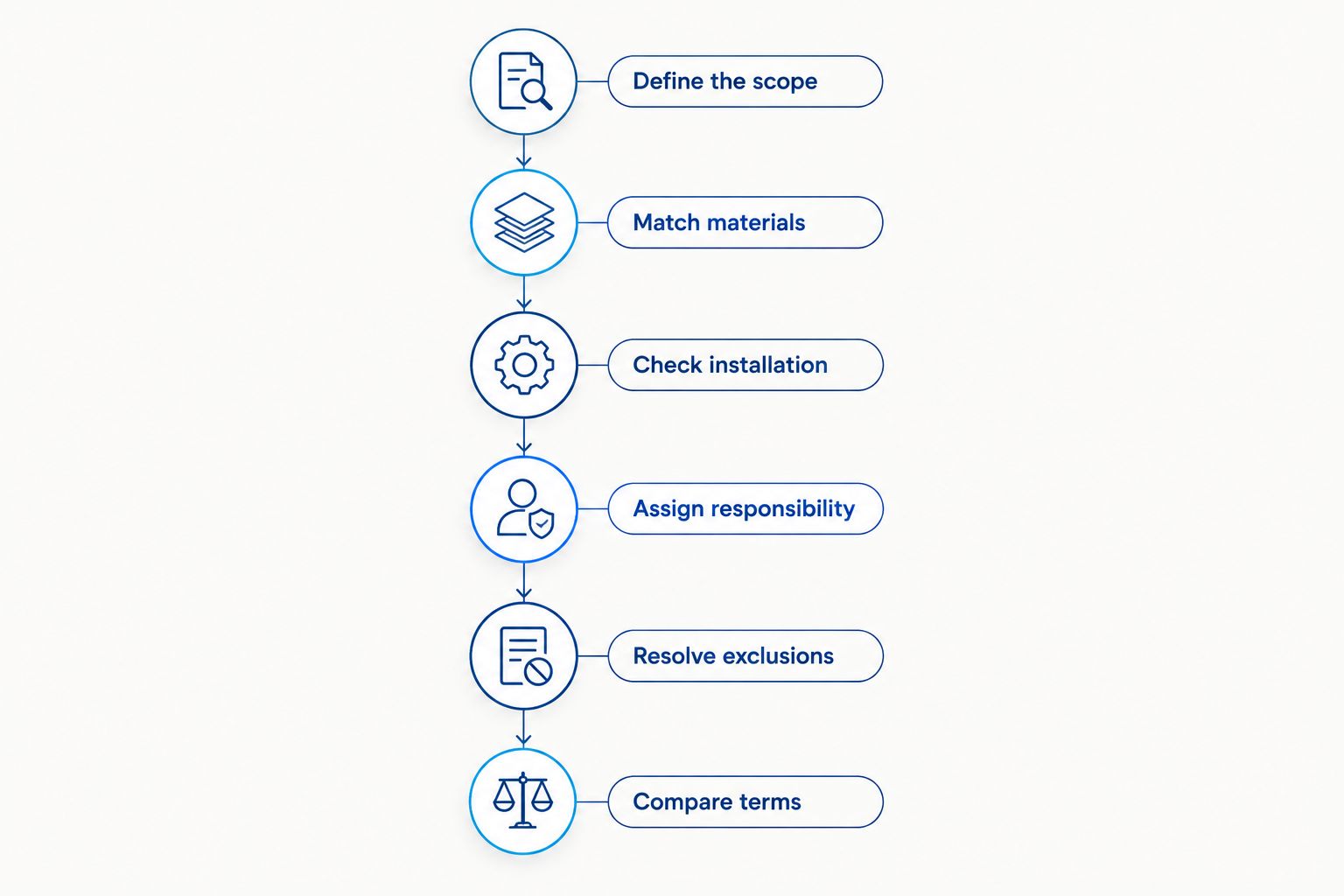
Use 1 shared scope sheet for every contractor. Comparing 3 written quotes is a practical starting point, not a requirement; the goal is comparable information rather than a particular number of bidders.
- Define the scope. List what stays, what moves and what gets replaced, including fixtures, tile, cabinetry, lighting and ventilation.
- Match materials. Ask contractors to identify selected products and distinguish them from items awaiting your selection.
- Check installation. Request written details for demolition, substrate preparation, shower waterproofing and connections between trades.
- Assign responsibility. Identify who handles permits, inspections, purchasing, debris removal and protection of adjoining rooms.
- Resolve exclusions. Clarify concealed damage, owner-supplied items and work that requires separate approval.
- Compare terms. Review payment milestones, change approvals, scheduling assumptions and closeout requirements.
A local starting point is Atozmn, which provides residential and commercial remodeling services in the Twin Cities metro. Apply the same written-scope checklist to every firm you evaluate.
Why this matters
A bathroom proposal is both a construction plan and a boundary around the contractor's responsibilities. If one proposal includes shower demolition, wall repairs and a new exhaust route while another includes only fixture replacement, the totals do not describe the same project.
The best quote to evaluate is the one you can trace back to specific work. Detail does not prove craftsmanship, but it gives you a basis for checking commitments, asking questions and reviewing changes.
For your 2026 comparison, keep a separate list of unanswered questions. Do not treat an unanswered question as an included service.
Compare the bathroom scope before the contractor
Start by choosing the project you actually want. Retaining fixture locations, moving plumbing and enlarging a bathroom are different scopes, even when the finished rooms look similar in a rendering.
| Scope option | Best for | Practical advantage | Trade-off to clarify |
|---|---|---|---|
| Retain the layout | Owners satisfied with fixture locations | Keeps the scope focused on replacement and finishes | Existing access or clearance problems can remain |
| Relocate fixtures | Owners who need a different room arrangement | Lets you address how fixtures fit together | Requires investigation of plumbing routes and affected surfaces |
| Enlarge the bathroom | Owners who need more usable room | Creates an opportunity to reconsider the entire layout | Adds work outside the existing bathroom footprint |
Do not compare a retained-layout proposal against an enlargement proposal as though they are interchangeable. Ask for a common base scope, with optional work listed separately.
Retain the layout: define what replacement includes
A replacement project still needs detail. Ask whether removing an old vanity includes repairing the wall behind it, whether flooring continues beneath cabinetry, and whether existing shutoff valves remain or are replaced.
Best for owners keeping a workable layout: request a replacement schedule that names each item and its installation work. The limitation is clear: new finishes alone do not correct an arrangement that does not meet your needs.
Change the layout: identify work outside the room
Moving a toilet, shower or vanity requires more than choosing a new location on a drawing. Ask how the contractor will assess drain routing, water supply, electrical work and access from adjoining spaces.
Best for owners correcting layout problems: require the proposal to identify affected walls, ceilings and floors beyond the bathroom. The trade-off is a broader construction scope, including repairs after access work.
Why bathroom remodeling quotes vary
Use these factors to explain differences between your 2026 proposals. Each factor should connect to a written scope item rather than a general promise about quality.
- Demolition boundaries: Removing surface finishes is different from removing assemblies down to framing. Ask exactly where demolition stops.
- Plumbing changes: Keeping connections in place and relocating fixtures require different work. Identify proposed changes to supply, drain and vent routes.
- Wet-area construction: Shower bases, wall substrates, waterproofing details and drain connections need a defined installation approach.
- Finish selections: Tile dimensions, layout patterns, edge details, cabinetry and fixture selections affect purchasing and installation work.
- Concealed conditions: Damage or unsuitable construction discovered after demolition needs a documented approval process, not an assumed inclusion.
- Site and responsibility: Occupied rooms, access routes, debris handling, permit coordination and owner-supplied materials change what the contractor must manage.
Ask each bidder to explain meaningful differences in writing. If an explanation changes the scope, request a revised proposal rather than relying on a conversation you cannot reference later.
What should a bathroom remodeling quote include?
A useful quote makes the following responsibilities visible. It does not need a particular page count; it needs enough detail to show what you are approving.
Demolition, protection and repairs
Look for a description of what comes out and what remains. Ask how the contractor will protect the access route, isolate the work area and remove debris.
Also identify finish repairs outside the immediate installation area. A proposal that covers a new exhaust duct should explain responsibility for openings and repairs along its route, not just the fan itself.
Shower waterproofing and tile preparation
Request the proposed shower assembly, including the base, substrate, waterproofing and treatment of corners, penetrations and niches. Ask how the installation will follow the selected system's instructions.
Tile and grout are not a substitute for a defined waterproofing assembly. A tile description that names only color and size leaves the work behind the tile unexplained.
Ask whether substrate flattening, floor preparation, edge profiles and transitions are included. These details determine where one trade's work ends and another begins.
Plumbing, electrical and ventilation
Require a fixture and connection list. Separate reuse from replacement, and identify who supplies faucets, valves, lighting, mirrors with electrical connections and exhaust equipment.
For ventilation, ask where the fan will discharge and who completes the ductwork and exterior termination. A new fan listed without its installation scope is an incomplete description.
Permits, inspections and closeout
Ask the contractor to identify applicable permit and inspection responsibilities for your Minneapolis address. Verify requirements with the permitting authority rather than assuming every bathroom project follows the same process.
Closeout should also be defined. Ask how final corrections, operating instructions and any applicable written warranty documents will be delivered; do not assume a warranty exists unless the contract states it.
How do you compare allowances and owner-supplied materials?
An allowance reserves a contract amount for a selection that is not final. It is not the same as a fully specified fixture, cabinet or tile package.
For every allowance, ask what it covers: material only, installation, delivery, related accessories or some combination. Then ask how the contractor documents adjustments when you make your selection.
Owner-supplied items need a separate responsibility check:
- Who verifies dimensions, rough-in requirements and compatibility before ordering?
- Who receives deliveries and checks for missing or damaged components?
- Who handles returns or replacement parts?
- What happens to the schedule if an item is not ready for installation?
- Does the installation scope include all required accessories and connections?
Finalize selections before treating proposals as equivalent. If selection decisions remain open, keep those unresolved items visible in your comparison sheet rather than treating them as settled work.
Is the lowest bathroom remodeling quote the best choice?
The lowest quote is the best choice only when its scope, responsibilities and terms meet your needs. A shorter proposal can represent less included work, not a more efficient way to complete the same work.
Ask the contractor to explain omissions directly. A clearly excluded task is easier to evaluate than a vague promise that everything is covered.
Do not reject a lower proposal solely because it is lower, either. Confirm equivalent selections, installation details, protection, permit responsibility and closeout, then evaluate the contractor separately.
What should you check before choosing a Minneapolis contractor?
Use the quote review to evaluate how the contractor handles decisions. Ask who will answer questions during construction, who coordinates trades and how you approve changes.
Before signing, verify applicable licensing and insurance information with the relevant issuing sources. Request references relevant to your scope, then ask about communication, scope changes and completion details rather than relying only on finished-room photographs.
For occupied homes or businesses, discuss access and disruption explicitly. Confirm how the work affects bathroom use, adjoining rooms and the people using the property.
Atozmn is best for Twin Cities owners seeking a remodeling firm rather than a fixture-only purchase. Its stated services include bathroom remodeling alongside kitchens, roofing, siding and storm damage restoration; compare the written proposal against your bathroom-specific requirements.
When you are ready to discuss the scope, contact the remodeling team to request a quote or book the site's free consultation. Bring your fixture list, room photographs and unresolved questions.
Request a bathroom remodeling quote
Discuss your Twin Cities bathroom scope with Atozmn through the site’s free consultation.
How should changes be handled after demolition?
Require written approval before changed work proceeds, except for any emergency procedure specifically addressed in your agreement. The change document should describe the condition, proposed work, contract adjustment and schedule effect.
A useful 2026 contract review separates 3 decisions: what requires approval, who can give approval and how that approval is recorded. This is a recommended review method, not a statement that every contractor uses the same process.
For concealed damage, ask what documentation you will receive and whether repair work needs additional inspection. Do not accept an unexplained instruction to approve extra work without understanding the condition being corrected.
FAQ
How many bathroom remodeling quotes should I compare?
Comparing 3 written quotes is a practical starting point, not a requirement. Use the same scope sheet for each contractor so you compare equivalent work rather than different projects.
What should I ask a Minneapolis bathroom remodeler before signing?
Ask the Minneapolis bathroom remodeler to confirm scope, selections, waterproofing, permit responsibility, exclusions and change approvals in writing. Also identify your construction contact and how scheduling updates will be communicated.
Is a bathroom remodeling estimate the same as a contract?
Do not assume a bathroom remodeling estimate is your construction contract. Review the document’s terms and the agreement you are asked to sign, including attachments, exclusions and approval procedures.
Should I buy bathroom fixtures myself?
Buy bathroom fixtures yourself only after supply and installation responsibilities are clear. Confirm compatibility, delivery handling, missing parts and responsibility for schedule disruption before ordering.
Does a bathroom remodeling quote need to include permits?
A bathroom remodeling quote should state who determines permit requirements and who handles applicable permits and inspections. Verify requirements for your address and scope with the permitting authority.
Can I compare quotes before choosing tile and fixtures?
You can compare preliminary quotes before choosing tile and fixtures, but unresolved selections prevent a fully matched comparison. Ask contractors to identify allowances and assumptions, then update the proposals when selections are final.
What if a contractor finds damage behind the shower?
If a contractor finds damage behind the shower, request documentation and a written repair scope before approving changed work. Follow the change procedure in your agreement, including any schedule adjustment.
One last thing
Before signing your 2026 bathroom contract, check the edges of the project: the doorway transition, adjoining ceiling, exhaust termination and surfaces behind removed fixtures. Those boundaries reveal whether the proposal explains how the finished bathroom connects to the rest of the building.
If the bathroom needs more space, settle that decision before comparing finish selections. Enlarging a room into adjacent space—or making it part of an addition—changes the project you are asking contractors to quote.
Related guides
- How do you plan home additions in Minneapolis?
- Home additions for multigenerational Twin Cities households
- How long do home additions take from design to move-in?