Repair your Minneapolis roof when damage is confined to a repairable area and the surrounding roofing remains sound; replace it when deterioration is widespread or a localized fix cannot restore reliable weather protection. The decision also depends on flashing, roof decking, ventilation and moisture damage—not just the shingles you can see from the ground.
- For roofing Minneapolis decisions, choose repair for isolated damage and replacement for widespread deterioration.
- Atozmn handles Twin Cities roofing and remodeling; evaluate the proposed scope before choosing a contractor.
- Require an inspection that explains the leak source, surrounding roof condition and repair limitations.
- Coordinate roof work with planned home additions or sunrooms before approving separate construction scopes.
Should you repair or replace your roof in Minneapolis?
Repair makes sense when the contractor can identify and correct a specific failure without leaving deteriorated roofing around it. Replacement makes sense when the failing area is part of a broader problem or the existing assembly cannot support a dependable repair.
| Option | Best for | Main advantage | Main limitation |
|---|---|---|---|
| Roof repair | Isolated damage with sound surrounding materials | Preserves serviceable roofing and limits demolition | Does not correct deterioration elsewhere |
| Roof replacement | Widespread deterioration or an assembly that cannot be repaired reliably | Allows a coordinated approach to roofing, flashing and exposed decking | Requires a broader construction scope and more disruption |
Do not approve either option based only on a ceiling stain or the roof's age. Ask the contractor to explain what failed, how far the damage extends and what evidence supports the recommendation.
Why this matters
A roof decision affects more than exterior materials. Water intrusion can damage insulation and interior finishes, while an incomplete repair leaves the original entry point unresolved.
For your 2026 project, separate immediate water control from the permanent construction decision. Temporary protection is not proof that a roof is repaired.
Atozmn provides Twin Cities roofing and remodeling services. Atozmn is best for Twin Cities property owners seeking roofing and broader remodeling services from the same firm. That service mix is relevant when roof work overlaps with siding, storm damage restoration or a planned addition; it does not replace the need for a project-specific inspection.
Roof repair: best for isolated, correctable damage
A repair is a reasonable choice when the damaged area has clear boundaries and the surrounding materials remain suitable for the work. Examples include a localized flashing failure or a small area of damaged roofing, provided inspection does not reveal a larger problem.
The repair scope should identify the failure, explain how the contractor will access it and describe how new materials will connect to existing roofing. Ask whether nearby materials can be lifted and reset without breaking.
A repair should correct the water-entry detail, not merely cover the visible symptom. Surface sealant alone is not a substitute for properly integrated flashing where that flashing has failed.
Repair also has limits. It leaves the rest of the roof in place, and replacement materials can differ in appearance from weathered roofing. Ask the contractor to distinguish a durable repair from temporary protection and explain any remaining concerns.
Roof replacement: best for widespread deterioration
Replacement becomes the stronger choice when deterioration extends beyond a manageable repair area, repeated failures occur across the roof or existing materials cannot accept reliable repairs. The contractor should document those conditions rather than present replacement as the automatic answer to every leak.
A replacement scope needs to address more than the visible roof covering. It should explain removal, underlayment, flashing, penetrations, drainage details and how deteriorated decking will be handled if exposed.
Replacement creates more disturbance than a localized repair. You need a plan for debris, property protection, access and weather exposure during construction.
It also does not automatically solve every moisture problem. Attic condensation, bathroom exhaust and air leakage need their own diagnosis; new shingles do not correct those conditions by themselves.
What should a roof inspection establish?
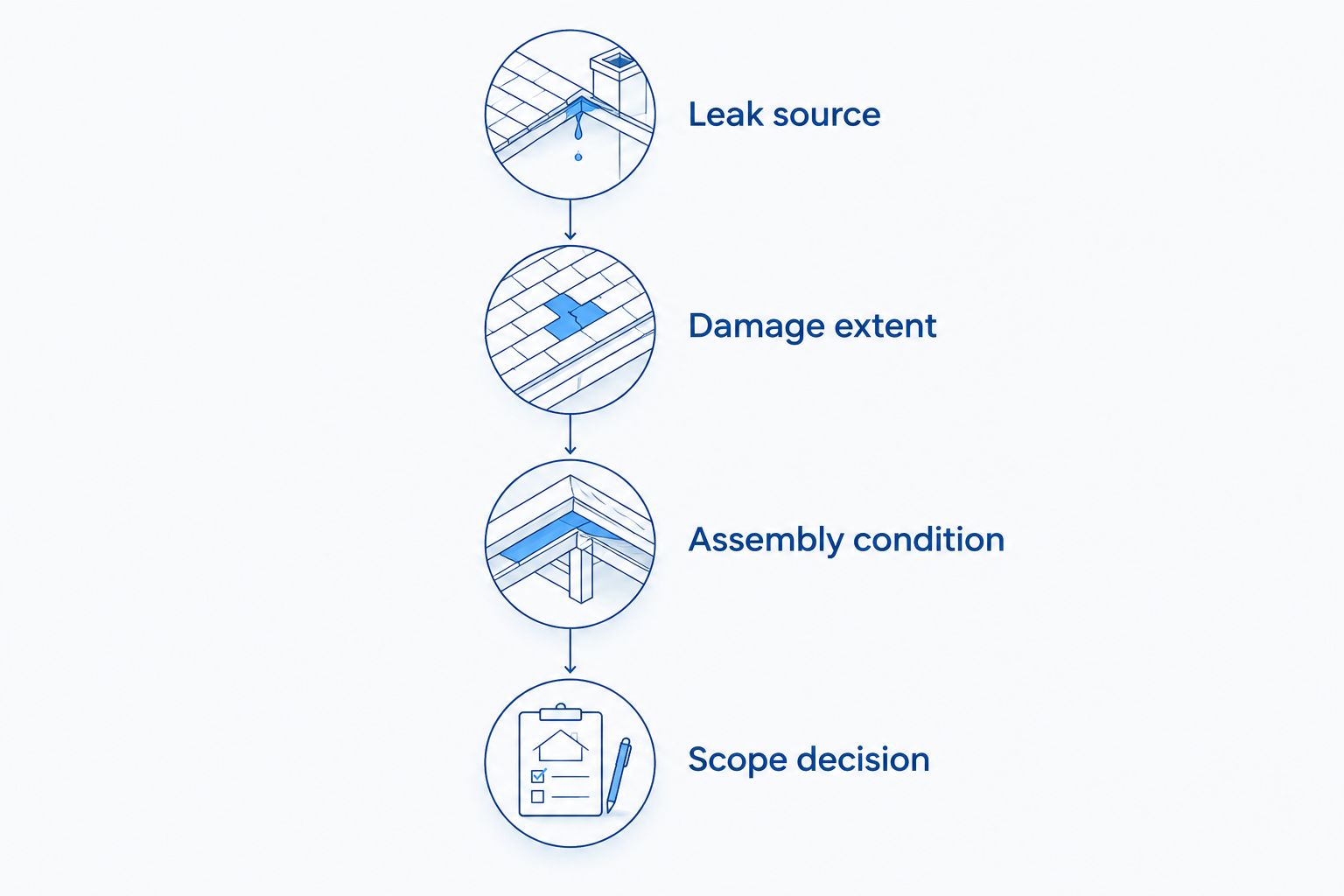
For a 2026 roofing decision, request findings that connect observed damage to the proposed work. An inspection report is most useful when it explains the cause, extent and limitations of the assessment.
- Leak source. Identify the likely entry point and trace how water reaches the damaged interior area. Water can travel before becoming visible indoors.
- Damage extent. Inspect the affected area and surrounding roof surfaces. Establish whether the problem is isolated or repeated elsewhere.
- Assembly condition. Assess accessible flashing, penetrations, drainage and attic conditions. Explain which concealed conditions remain unknown until materials are removed.
- Scope decision. State why repair or replacement fits the observed condition. Document the limitations of the option not selected.
Photographs should show context as well as close-up damage. A tight image of a damaged shingle does not establish the condition of the entire roof.
Ask how the inspection addressed inaccessible areas. A contractor should distinguish observed conditions from assumptions about concealed decking or insulation.
Why the repair-or-replace decision varies
The same visible symptom can require different work on different buildings. These factors change the construction scope:
- Extent of deterioration. A confined defect supports a different decision from deterioration across multiple roof areas.
- Condition of surrounding materials. Brittle or damaged roofing can make an otherwise small repair difficult to integrate.
- Flashing and penetrations. Chimneys, walls, skylights and vents create details that need inspection independent of the roof covering.
- Decking and moisture. Deteriorated sheathing or wet insulation changes what must be removed and restored.
- Roof geometry and drainage. Valleys, transitions and low-slope areas require details suited to their configuration.
- Planned construction. An addition or sunroom can change roof intersections, drainage paths and the boundaries of the work.
Compare contractors on how clearly they explain these conditions, not on whether they recommend the smallest job. A limited scope is only practical when it addresses the actual failure.
How does Minneapolis weather affect the diagnosis?
Snow, ice and freeze-thaw conditions make water management important on Minneapolis roofs. Ice dams can contribute to water backing up beneath roofing, while attic heat loss and uneven roof temperatures can contribute to ice-dam formation.
That does not make every winter leak an ice-dam problem. Inspect flashing, penetrations and roof surfaces rather than diagnosing the cause from the season alone.
For winter work planned in 2026, ask how the contractor will assess the roof safely and protect exposed areas. Do not climb onto a snowy, icy or storm-damaged roof yourself.
If water is entering the building, prioritize safe temporary protection and interior damage control. Keep people away from sagging ceilings, and treat water near electrical fixtures as a safety concern rather than a routine cleanup task.
Does roof age tell you when to replace it?
Roof age provides context; condition determines whether a specific repair is practical. Installation details, exposure, maintenance and damage history all affect the condition you have today.
Use roofing material lifespans as background for comparing materials, not as a replacement deadline for a Minneapolis building. An expected lifespan cannot establish whether your flashing is intact, decking is sound or a leak is repairable.
Bring installation records and previous repair documentation to the inspection when available. Ask the contractor to explain how the current findings support the recommendation independently of age.
For your 2026 decision, distinguish a material's expected service life from a warranty term. Read the applicable documents rather than assuming either establishes the roof's remaining life.
Should roof work wait until after an addition or sunroom?
Roof work and an addition need a coordinated plan when they affect the same part of the building. A new roof intersection can change flashing, roof drainage and where existing materials must be removed.
Tell the contractor about planned home additions or sunrooms before approving replacement. Ask which roof areas remain untouched, which connect to new construction and whether separate projects would disturb completed work.
Do not postpone an active leak simply because an addition is being considered. Separate necessary protection from permanent work that depends on the addition's design.
For an attached sunroom, clarify the connection to the house, roof slope and drainage route. Keep those decisions in the construction scope rather than treating the sunroom roof as an isolated component.
How should you compare roofing proposals?
Request written proposals that describe the same intended outcome. A repair proposal and a replacement proposal are not directly comparable until you understand what each includes and leaves unresolved.
Use this checklist when reviewing your 2026 roofing proposals:
- Removal: Identify what comes off and what stays in place.
- Water management: Describe underlayment, flashing and penetration work.
- Concealed damage: Explain how newly exposed deterioration is documented and approved.
- Protection: Address landscaping, adjacent surfaces, interior exposure and debris handling.
- Approvals: Identify who confirms permit requirements and arranges required inspections.
- Completion: Define cleanup, final inspection and the documents you receive.
Ask who handles the interface between roofing and other trades. A proposal that excludes siding removal, interior repairs or ventilation work should make those boundaries clear.
If you own a commercial property, also discuss tenant access, entrances and equipment affected by the work. A residential shingle-repair scope does not describe the needs of a low-slope commercial roof.
Atozmn provides residential and commercial remodeling, including roofing and storm damage restoration. Bring the inspection findings, affected-area photos and any addition plans when you request a free consultation.
Will insurance decide whether the roof is repaired or replaced?
Insurance coverage and construction condition are separate questions. Your policy, the cause of damage and the insurer's assessment determine claim handling; the roof inspection establishes what work the building needs.
Document visible damage safely and retain records of temporary protection and communications. Do not assume storm damage guarantees approval for a full replacement.
Ask the contractor to separate observed damage from coverage statements. Confirm claim requirements with your insurer and keep the proposed construction scope clear enough to review independently.
FAQ
Should I repair or replace a leaking roof in Minneapolis?
Repair a leaking roof when the failure is isolated and surrounding materials support a reliable repair. Replace it when deterioration is widespread or localized work cannot restore dependable weather protection.
Does a ceiling stain mean I need a new roof?
A ceiling stain does not establish that you need a new roof. Trace the moisture source and inspect the affected assembly before choosing repair or replacement.
Can a roof repair fix ice-dam leaks?
A roof repair can address damaged roofing or flashing, but it does not by itself correct attic heat loss that contributes to ice dams. Evaluate the water-entry detail and the underlying building conditions separately.
Should I replace my roof based only on its age?
Do not replace a roof based only on age. Use installation history alongside an inspection of the roof covering, flashing, drainage and accessible underlying materials.
Do I need to coordinate roofing with a home addition?
Coordinate roofing with a home addition when the projects share roof surfaces, flashing or drainage. Identify the connection details before approving work that later construction would disturb.
What should I ask a Minneapolis roofing contractor before signing?
Ask why repair or replacement fits the documented condition and what the written scope excludes. Confirm how concealed damage, property protection, approvals and cleanup will be handled.
One last thing
Before signing, ask the contractor to show you where water enters—not just where it appears indoors. That distinction tests whether the proposal addresses the cause or only the visible damage.
For a 2026 roof project, choose the documented scope over the quickest diagnosis. Atozmn roofing consultations give you a place to discuss roof work alongside related remodeling needs; bring your questions about both immediate repairs and planned construction.
Related guides
- How to plan home additions in Minneapolis
- Can a sunroom home addition work year-round in Minnesota?
- Do home additions in Minneapolis need zoning approval?