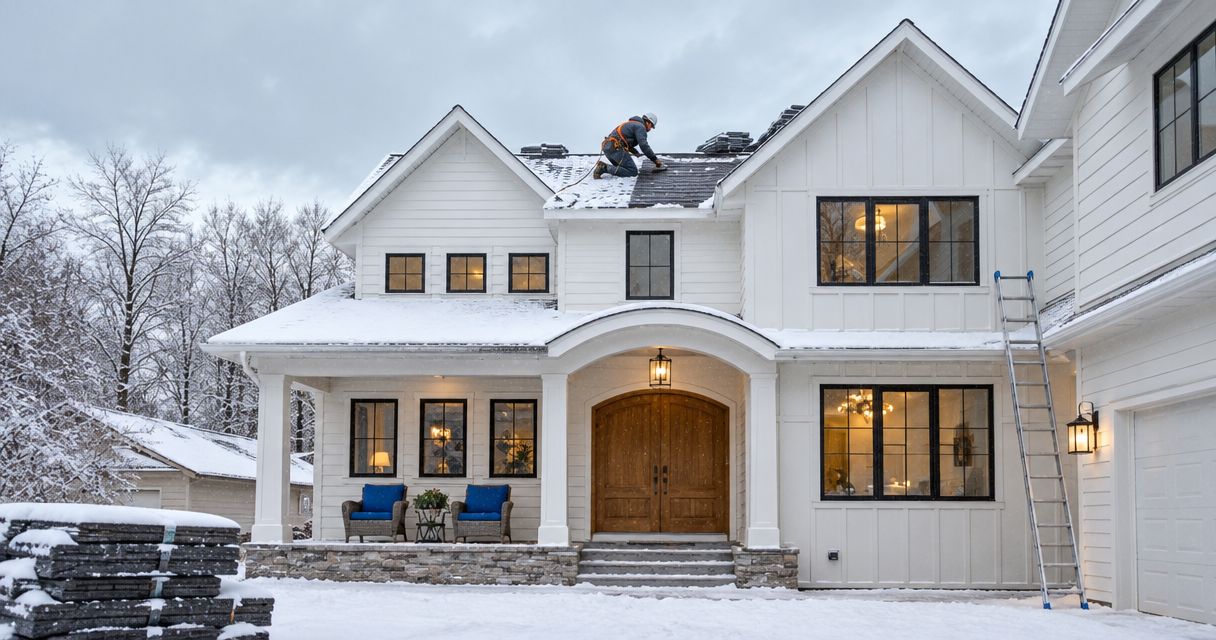
Yes, roof replacement can happen during a Minneapolis winter when the roof surface, weather window, materials, and installation method meet the roofing manufacturer's requirements. Snow, ice, wind, and cold-weather sealing requirements can stop or change the work even when a crew is available. For roofing Minneapolis properties in 2026, approve the installation conditions and weather-protection plan before approving the start date.
- For roofing Minneapolis homes, winter replacement depends on safe access, dry surfaces, and the selected roofing system’s installation instructions.
- Atozmn provides Twin Cities remodeling and roofing services; evaluate the proposed winter installation plan before choosing a contractor.
- Active leaks need prompt assessment, but temporary protection and full replacement are different scopes.
- Ask how the contractor will handle cold-weather sealing, exposed decking, and a weather interruption.
Why this matters
A winter roof decision is about controlling exposure, not simply finding an open installation date. Removing roofing exposes the building to weather, while installing over unsuitable conditions creates a different problem: a finished roof that was not installed according to its requirements.
Your written scope should explain both the finished roof and how the contractor will protect the building during construction. Start with what belongs in a Minneapolis roof replacement estimate, then ask the contractor to address winter conditions specifically.
Can roof replacement happen in a Minneapolis winter?
Winter replacement is possible; a calendar date alone does not establish suitable installation conditions. A contractor needs to evaluate the selected roof covering, existing roof condition, access, forecast, and ability to keep the building protected.
For asphalt shingles, cold weather affects flexibility and adhesive sealing. Other roof systems have their own installation requirements, so a recommendation for one material does not establish that another material is suitable under the same conditions.
Use this decision table to separate the available approaches. None replaces an inspection of the actual roof.
| Approach | Best for | Main advantage | Main limitation |
|---|---|---|---|
| Winter replacement | A roof requiring replacement when suitable installation conditions exist | Addresses the replacement scope without waiting for another season | Requires suitable weather, access, and material-specific cold-weather procedures |
| Temporary protection | An urgent opening or leak when permanent installation conditions are unsuitable | Addresses immediate exposure while permanent work is planned | Does not resolve the full replacement scope |
| Scheduled replacement later | A roof assessed as suitable to remain in service until a later installation window | Allows work to be planned around more suitable conditions | Requires an interim plan if the roof condition changes |
Ask for the reason behind the recommendation. A contractor should distinguish an urgent building-protection issue from a roof that needs replacement but does not require immediate tear-off.
What must be checked before winter tear-off?
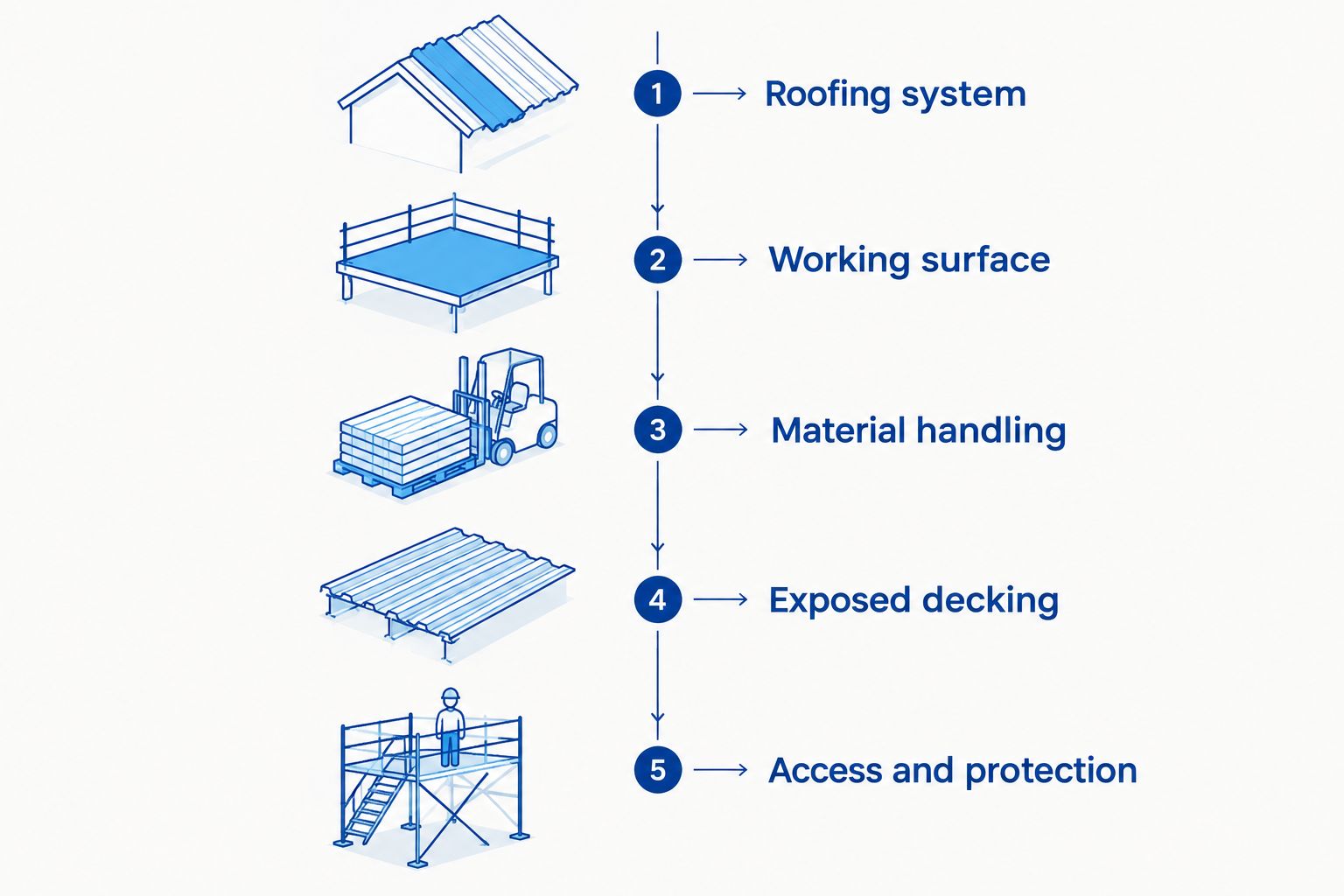
Use these checks before authorizing removal of the existing roof. Each belongs in the discussion before materials reach the roof, not after the building is open.
- Confirm the roofing system. Identify the roof covering and the manufacturer's installation instructions that apply. Ask which cold-weather procedures are required for that specific material.
- Inspect the working surface. Establish how snow, ice, and moisture will be addressed. Clearing visible snow is not the same as confirming a suitable surface beneath it.
- Plan material handling. Ask how materials will be stored, moved, and handled under the expected conditions. Cold asphalt shingles need handling that avoids damage.
- Limit exposed decking. Ask how the contractor will divide the work and protect unfinished areas if conditions change. The plan should not depend entirely on an uninterrupted forecast.
- Confirm access and protection. Discuss ladders, staging, walkways, landscaping, and falling snow or debris. For commercial properties, include entrances and public access.
These checks serve different purposes. Material instructions address installation requirements; access planning addresses site safety; temporary protection addresses the building's exposure during work. A satisfactory answer to one does not replace the others.
Why winter roof replacement conditions vary
Minneapolis winter roofing cannot be reduced to a single temperature rule. These factors determine whether the proposed work and conditions fit together:
- Roof covering: Asphalt shingles, metal roofing, and membrane systems have different attachment and installation requirements.
- Surface condition: Snow, frost, ice, and moisture affect whether the deck is ready for the next roofing layer.
- Weather window: Precipitation and wind affect installation, access, and protection of exposed areas.
- Roof shape: Pitch, valleys, penetrations, and intersecting roof planes change access and flashing work.
- Existing damage: Wet materials, deteriorated decking, and damaged flashing can expand the work after removal.
- Site access: Entry locations, adjacent buildings, and snow storage affect how the crew can stage and protect the property.
Water freezes at 32°F, or 0°C, under ordinary atmospheric conditions. That is not a universal roofing installation cutoff. A roof surface can have conditions different from the reported air temperature, and the product instructions remain the reference for installation.
For your 2026 project, ask the contractor to explain the actual decision rule: what conditions allow work to begin, what conditions stop it, and how an interruption will be handled.
Does cold weather change how asphalt shingles seal?
Cold weather affects asphalt shingle flexibility and the activation of factory-applied sealant. Nailing shingles in place and achieving the intended seal are related but distinct parts of installation.
Ask whether the selected shingle requires hand-sealing under the expected conditions. If it does, the contractor should follow the manufacturer's specified method and compatible materials rather than treating extra sealant as a generic solution.
A useful written answer identifies:
- The selected shingle and applicable installation instructions.
- The cold-weather fastening and sealing procedures.
- How damaged shingles will be identified and replaced.
- What follow-up, if any, the proposed installation requires.
Do not accept a blanket promise that sunlight will resolve every sealing issue later. The installation plan must address the conditions present during the work and the requirements of the selected product.
What should your 2026 winter roofing estimate explain?
A winter estimate should identify the roofing materials, removal scope, flashing work, decking provisions, and site cleanup. It should also distinguish work included in the agreement from work requiring additional authorization.
Roofing quantities sometimes use a roofing square, which equals 100 square feet of roof area. That unit describes area, not the total complexity of the job: valleys, penetrations, waste allowances, and flashing details still need their own explanation.
Ask how concealed decking damage will be documented and approved. A clear agreement states who receives the information and authorizes a change, rather than leaving that decision unresolved during tear-off.
Also ask what happens when the forecast changes after scheduling. The agreement should explain postponement, protection of partially completed work, and communication with you. A promised start date is not a substitute for these provisions.
How do underlayment and flashing affect winter work?
Underlayment sits beneath the roof covering, while flashing manages water at transitions such as walls, chimneys, and roof penetrations. They perform different jobs, and both belong in the replacement scope.
The choice of roofing underlayment for cold weather must account for the roof covering, substrate, fastening method, and manufacturer's installation limits—not just a material's winter-oriented description. Ask which product is specified and how its instructions address the expected installation conditions.
Underlayment also has product-specific exposure limits. Do not assume an installed layer allows the contractor to leave the roof unfinished indefinitely, or that every underlayment provides the same temporary protection.
For flashing, ask whether the scope calls for replacement, reuse, or further evaluation after removal. Wall intersections deserve particular attention when roofing work meets siding or an addition. Those transitions need a defined detail, not an assumption that the existing metal can stay.
What if snow or freezing rain interrupts the job?
A weather interruption requires a building-protection response, not just a revised appointment. Before work starts, ask who decides to stop, how unfinished areas will be secured, and how you will receive an update.
Your discussion should cover:
- Open areas: How the contractor limits removal to an area that can be protected.
- Temporary covering: What protection is proposed if permanent roofing cannot be completed.
- Interior checks: Where you should watch for water entry and how to report it.
- Restart conditions: What must be checked before installation resumes.
Temporary protection has limits. It is not a permanent repair, and it does not establish that wet decking or insulation is ready to cover. Ask how any affected materials will be assessed before the roof assembly is closed.
If you see interior water entry, report it promptly. Keep people away from sagging ceilings and wet electrical fixtures, and do not climb an icy roof to investigate.
Should roofing wait for an addition or sunroom project?
Roofing and an addition should be coordinated when the new construction changes the existing roof. An addition or sunroom can introduce a roof intersection, wall transition, gutter change, or new flashing detail.
For a combined 2026 project, resolve those connections before replacing the affected roof area. Otherwise, the addition scope can require recently completed work to be opened again. This is a sequencing issue, not a reason to delay an urgent roof problem.
Give the contractor the planned addition footprint and intended connection to the house. Ask which existing roofing areas remain, which change, and where responsibility for the shared details sits.
Atozmn is a fit for Twin Cities property owners seeking roofing and remodeling services from a local firm. Atozmn provides residential and commercial remodeling, including roofing; evaluate the proposed scope, installation requirements, and coordination plan rather than assuming every project has the same solution.
A local firm's service area is relevant to your search, but it does not replace checking the agreement. Ask Atozmn to explain the winter roof scope and any connection to planned additions or sunroom work during the site's free consultation.
Discuss your winter roofing project
Request a quote or book a free consultation to discuss roof conditions, scope, and related remodeling.
Can you stay inside during winter roof replacement?
Remaining inside depends on the project scope and site-safety plan. Discuss overhead work, noise, entrances, pets, and any interior areas affected by leaks or decking repairs before the start date.
Commercial owners should also identify occupied areas and public entrances. Ask how the contractor will separate those areas from material handling and falling debris.
Is winter roof replacement automatically an emergency?
Winter roof replacement is not automatically an emergency; urgency depends on the roof's condition and the building's exposure. Active water entry needs prompt assessment, but the immediate response can differ from the permanent replacement plan.
Ask the contractor to explain why temporary protection, repair, or replacement fits the observed damage. Keep that explanation separate from scheduling preferences.
FAQ
Can roofers replace shingles when it is below freezing?
Below-freezing installation depends on the selected shingle’s instructions and actual site conditions. Ask about handling, fastening, sealing, and the conditions that would stop work.
Will new asphalt shingles seal during a Minneapolis winter?
Cold weather can delay activation of asphalt shingle sealant. The contractor must follow the selected manufacturer’s cold-weather sealing instructions rather than assume every shingle will seal immediately.
Can roofers install new roofing over snow or ice?
Snow and ice must be addressed before roofing installation. Ask how the contractor will verify that the working surface meets the selected system’s requirements.
Should I wait until spring if my roof is leaking?
An active leak needs prompt assessment rather than an automatic wait until spring. The assessment should distinguish immediate protection from the permanent repair or replacement scope.
Does an ice dam mean I need a new roof?
An ice dam alone does not establish that full roof replacement is necessary. The assessment should consider water entry, roof damage, insulation, air leakage, and ventilation conditions.
What should I ask a Minneapolis roofing contractor in 2026?
Ask for the selected materials, winter installation procedures, flashing scope, decking-change process, and weather-interruption plan. Also confirm site access and how unfinished roof areas will be protected.
One last thing
Ask this before signing: What happens if the roof is open and the weather changes? The answer should describe protection, responsibility, and communication—not simply confidence in the forecast. A winter roofing plan is incomplete until it explains the interruption as clearly as the installation.
Related guides
- Should you repair or replace your roof in Minneapolis?
- How do you plan home additions in Minneapolis?
- Can a sunroom home addition work year-round in Minnesota?