Budget for kitchen remodeling in Minneapolis by defining the work, checking existing conditions, and comparing written quotes for the same scope before committing to construction. Keep a separate reserve for concealed damage or required corrections, and account for expenses outside the construction contract, including temporary cooking arrangements and owner-purchased materials.
- Kitchen remodeling Minneapolis: build your budget around a written scope before comparing contractor quotes.
- Separate layout changes, material selections, installation work, and owner responsibilities so omissions are visible.
- Keep a project reserve separate from optional upgrades; concealed conditions need their own funding decision.
- Atozmn serves Twin Cities homeowners considering kitchen remodeling; request a scope-specific quote rather than assuming a package total.
How do you budget for kitchen remodeling in Minneapolis?
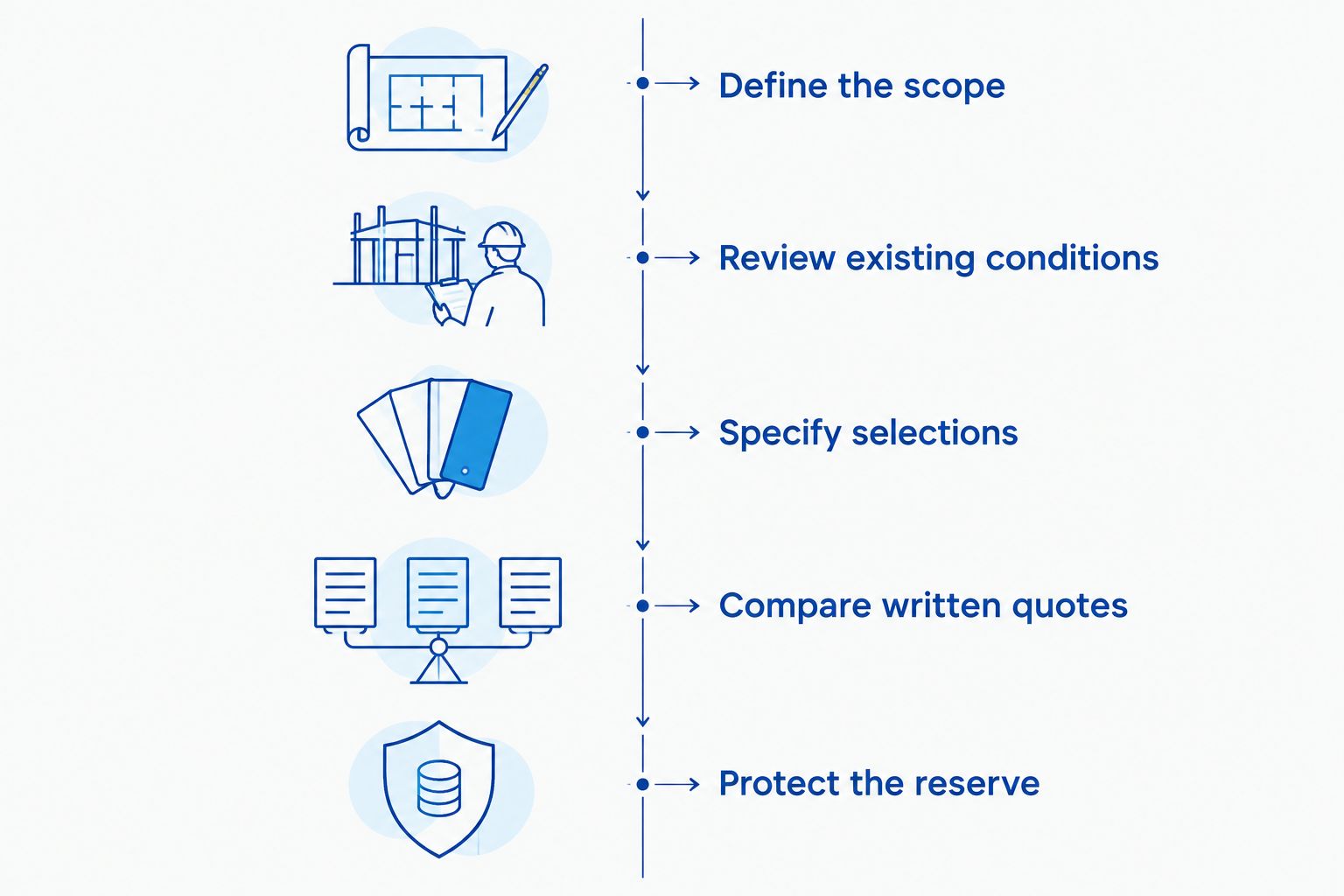
Build your 2026 kitchen budget in a fixed order: decide what must change, document the existing kitchen, choose the specifications that affect construction, and request comparable proposals. Then reconcile the full project budget before signing. A contractor's quoted total and your complete project budget are not necessarily the same thing.
Atozmn is a local remodeling option for Twin Cities homeowners seeking kitchen work. Evaluate fit through the proposed scope, exclusions, project responsibilities, and written answers—not a general promise to transform the room.
1. Define the scope
Write down the problems your kitchen must solve. Distinguish worn finishes from inadequate storage, poor circulation, or a layout that prevents you from using the room effectively.
Separate requirements from preferences. Replacing damaged cabinetry is a different decision from moving the sink because you prefer another view. Both belong in the discussion, but they should not become indistinguishable obligations in your budget.
2. Review existing conditions
Ask the contractor to review the areas affected by the proposed work, including plumbing connections, electrical service to appliances, wall openings, and floor transitions. Identify what can be inspected before demolition and what remains concealed.
An early site review does not expose everything behind walls. Its purpose is to turn visible conditions into a defined scope and document unresolved questions before construction starts.
3. Specify selections
List cabinetry, countertops, flooring, fixtures, lighting, and appliances with enough detail for contractors to quote the same work. Record who purchases each item and who handles delivery, storage, installation, and disposal of packaging.
Avoid treating an unspecified material allowance as a finished selection. An allowance leaves a purchasing decision open; the contract should explain how the final selection changes the amount you owe.
4. Compare written quotes
Request proposals using the same scope and selection list. Check whether demolition, debris removal, surface repairs, permits, installation, and final connections are included or excluded.
Do not compare totals until you have compared responsibilities. A proposal that omits electrical work is not directly comparable with one that includes it, even if both describe a kitchen remodel.
5. Protect the reserve
Keep funds for uncertain conditions separate from money allocated to selected upgrades. Ask how concealed damage, required corrections, and owner-requested changes will be documented and approved.
Do not spend the reserve on finishes before the uncertainty it covers has been resolved. Your reserve is a planning tool, not permission to accept an undefined contract.
Why this matters
A kitchen budget fails when the number looks complete but the responsibilities are not. You need to know whether the proposal covers a usable finished kitchen or only selected portions of the work.
For a 2026 Minneapolis project, use one budget document that includes the construction contract, purchases you manage yourself, temporary arrangements, and the reserve. Update that document whenever you approve a scope change. Otherwise, separate decisions can conceal the total commitment.
Which kitchen remodeling scope fits your budget?
Choose the scope around the problem you need to solve, not around the largest renovation you can imagine. Keeping the footprint, changing the layout, and adding space create different planning obligations.
| Scope | Best for | Main advantage | Main limitation | Budget questions |
|---|---|---|---|---|
| Existing-footprint remodel | Homeowners whose kitchen location and circulation already work | Keeps the project focused on the existing room | Does not solve a shortage of floor area | What stays, what gets replaced, and what needs repair? |
| Layout-changing remodel | Homeowners who need different appliance, sink, or cabinet locations | Addresses how the kitchen functions | Adds coordination around affected walls and building systems | Which plumbing, electrical, structural, and finish work follows the layout change? |
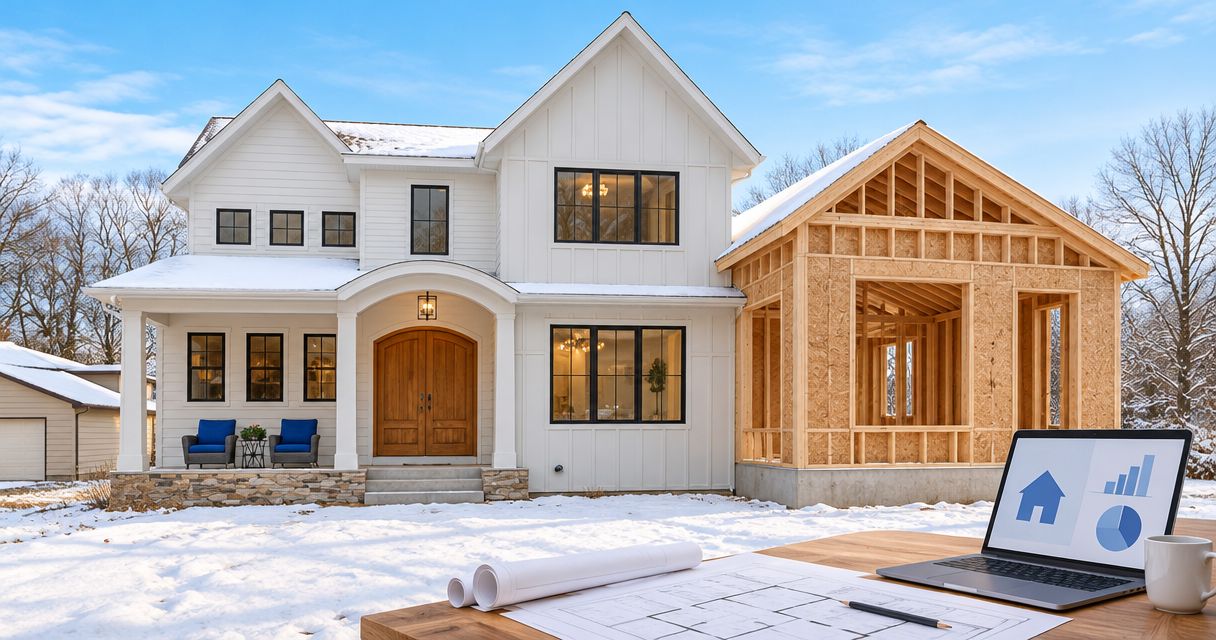
| Kitchen with an addition | Homeowners whose space needs cannot be met inside the current footprint | Creates room beyond the existing kitchen | Expands planning to the building envelope and site | What foundation, roof, exterior, utility, and approval work belongs in the proposal? |
Existing-footprint remodel
Best for: a kitchen that works spatially but needs replacement materials or better storage. Begin by identifying cabinets, appliances, and connections that will remain. Keeping an item does not eliminate the need to protect it or coordinate adjacent work.
The advantage is a tighter scope. The limitation is equally clear: new cabinets and surfaces cannot create floor area that does not exist. Confirm that your circulation and appliance clearances work before committing to replacements.
Layout-changing remodel
Best for: a kitchen whose current arrangement interferes with everyday use. Mark proposed sink, cooking, refrigeration, and storage locations on the same plan before requesting construction quotes.
Moving an appliance or fixture affects more than its visible location. Ask the contractor to identify associated connections, wall repairs, floor repairs, and ventilation work. The benefit is a layout designed around your needs; the trade-off is a broader construction scope.
Kitchen with an addition
Best for: households that need additional enclosed space rather than replacement finishes alone. Decide whether the project needs a larger kitchen, an adjacent dining area, or another room that releases space within the house.
An addition brings foundation, roof connections, exterior finishes, and site considerations into the budget. A sunroom also requires its own intended-use discussion; do not assume it substitutes for conditioned kitchen space. Resolve that distinction before comparing proposals.
Why kitchen remodeling budgets vary
The scope behind the quote explains more than the project label. For your 2026 budget, have the contractor address these drivers explicitly:
- Layout changes: Moving fixtures and appliances changes the connections and surrounding repairs the project requires.
- Existing conditions: Concealed damage or unsuitable existing work creates decisions that cannot be settled through finish selections.
- Material specifications: Cabinet construction, countertop details, flooring, and fixture selections determine what the contractor must supply and install.
- Building-system work: Electrical, plumbing, and ventilation responsibilities need clear boundaries, including final connections.
- Project boundaries: An addition reaches beyond the kitchen into structural, exterior, and site work.
- Owner responsibilities: Purchasing materials yourself transfers coordination tasks; it does not remove those tasks from the project.
Ask for the effect of each proposed change in writing. A useful explanation identifies the changed work, its effect on the contract, and whether it changes the construction sequence.
What should your kitchen budget include?
Use the following worksheet headings when reviewing proposals. Leave a category marked unresolved until you have a written answer; do not silently treat an unknown as included.
| Budget category | What to document | What to check |
|---|---|---|
| Planning and approvals | Drawings, permit responsibilities, and required reviews | Who prepares, submits, and pays for each item? |
| Demolition and protection | Removal, disposal, and protection of retained areas | What remains usable during construction? |
| Construction and connections | Carpentry, affected building systems, and installation | Where does each trade's responsibility end? |
| Materials and finishes | Selected products, allowances, and owner purchases | Are specifications and installation requirements settled? |
| Household arrangements | Cooking, storage, access, and cleaning arrangements | Which expenses sit outside the contractor's proposal? |
| Reserve and changes | Unresolved conditions and approval procedures | How will additional work be authorized? |
For 2026 quote comparisons, keep a separate column for exclusions. An excluded task still needs an owner, a plan, and funding if the finished kitchen depends on it.
Resolve gaps before choosing a contractor. A tidy spreadsheet does not make an incomplete scope complete.
How do you compare kitchen remodeling quotes fairly?
Compare the work before the total. Start with the same plan and selection list, then ask each contractor to explain differences in writing.
Check these items during your review:
- Does the proposal identify retained items and the protection they require?
- Are material allowances distinguished from specified selections?
- Who handles appliance delivery and final connections?
- Who confirms permit and inspection responsibilities?
- What work is excluded, and who completes it?
- How are change orders approved before additional work starts?
Atozmn provides kitchen remodeling among its Twin Cities remodeling services. The relevant advantage is having a local firm to evaluate for that work; the trade-off is that a service description alone does not establish what your individual contract includes. Request a written, property-specific scope.
Request a kitchen remodeling quote
Discuss your kitchen scope, layout decisions, and budget questions through the site’s free consultation.
Should you keep the kitchen layout to control the budget?
Keeping the layout is a useful starting point when the current kitchen functions well. Ask for a clearly defined existing-footprint proposal before adding relocations, so you can distinguish replacement work from layout-driven work.
Do not preserve a layout that leaves your main problem unsolved. If circulation or storage is the reason for remodeling, compare the scope of correcting that problem with the scope of simply replacing materials.
How much should you reserve for unexpected kitchen work?
Set the reserve around identified uncertainty rather than treating a generic percentage as a guarantee. Ask which existing conditions remain unverified and what decisions would follow if demolition exposes a problem.
Keep optional upgrades outside that reserve. Require a written description and authorization for additional work so an unexpected condition does not become an open-ended instruction to proceed.
When should you consider an addition instead of a kitchen-only remodel?
Consider an addition when your required space cannot be created within the existing footprint without unacceptable compromises elsewhere. First test whether cabinet changes, room connections, or a revised layout solve the problem.
An addition changes the project boundary. Before choosing it, compare the whole building scope—not just the kitchen finishes—and discuss zoning, site access, structural connections, and intended use with the appropriate project professionals.
FAQ
What’s the first step in budgeting for kitchen remodeling in Minneapolis?
Define the work your kitchen must accomplish before requesting quotes. Separate required repairs and functional changes from optional finishes, then give contractors the same written scope.
Can I compare kitchen remodeling quotes by the total alone?
No. Compare specifications, allowances, exclusions, and installation responsibilities before comparing totals. Proposals with different work included are not equivalent offers.
Does keeping my kitchen layout eliminate plumbing and electrical work?
No. Keeping the layout does not establish that existing connections are suitable for the proposed work. Have the contractor identify the connections and corrections included in the scope.
Should my kitchen remodeling budget include appliances I buy myself?
Yes. Owner-purchased appliances belong in your complete project budget even when they are outside the construction contract. Confirm delivery, storage, installation, and connection responsibilities.
Is a kitchen addition better than remodeling the existing room?
A kitchen addition fits projects that need space the existing footprint cannot provide. Remodeling within the room fits projects whose needs can be met without expanding the building; compare the complete scope of each approach.
How do I request a kitchen remodeling quote from Atozmn?
Use the website’s contact page to request a quote or book the site’s free consultation. Prepare your project goals, proposed layout changes, and questions about what the written proposal will include.
One last thing
Decide what you are keeping as carefully as what you are replacing. Retained flooring, cabinets, appliances, and adjacent rooms still need protection and clear construction boundaries.
Before signing your 2026 kitchen contract, ask the contractor to walk through the finished-room requirements against the written scope. Then request a quote with those decisions documented, rather than asking for a total based only on the phrase kitchen remodel.
Related guides
- How to compare bathroom remodeling quotes in Minneapolis
- How to plan home additions in Minneapolis
- Can a sunroom home addition work year-round in Minnesota?